

CAIO Connect Podcast
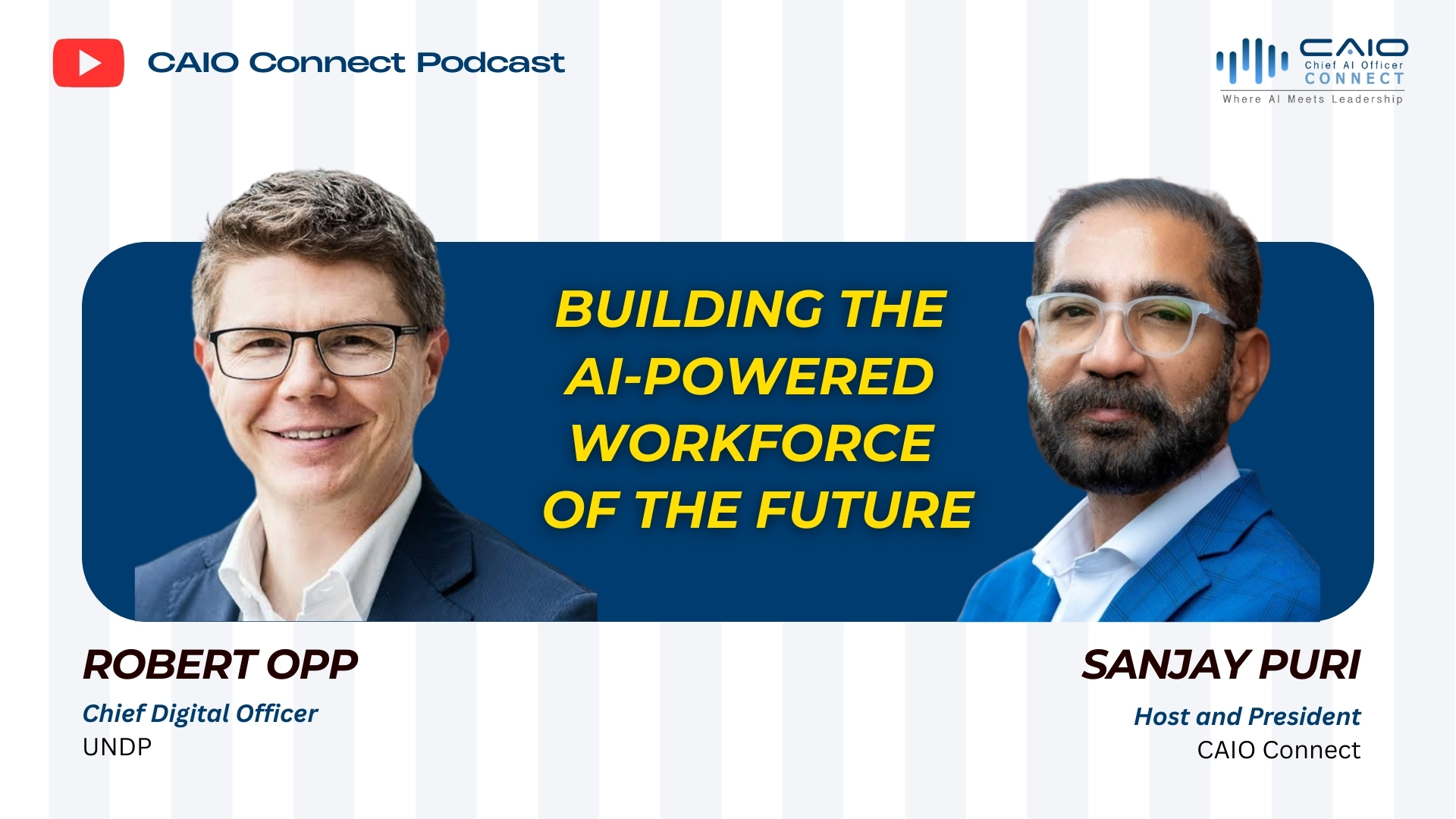
Robert Opp, Chief Digital Officer, UNDP with Sanjay Puri, Founder and Chairman, Knowledge Networks
On the CAIO Connect Podcast, UNDP’s Robert Opp explains why responsible AI, inclusion, and trust are key to scaling AI and reducing global inequality.
There’s a misconception that low- and middle-income countries somehow have a deficit of innovation or creativity. That’s simply not true.”
— Robert Opp
WASHINGTON, DC, UNITED STATES, January 30, 2026 /EINPresswire.com/ -- There’s a persistent myth in global tech conversations: that innovation is scarce in low- and middle-income countries. On the CAIO Connect Podcast, hosted by Sanjay Puri, Robert Opp, Chief Digital Officer at the
United Nations Development Programme (UNDP), dismantles that idea in minutes.“Human genius is distributed equally,” Opp says. “Opportunity isn’t.”
In a wide-ranging and thoughtful conversation, the episode explores how artificial intelligence can either deepen global inequality or become one of the most powerful tools for inclusive development the world has ever seen.
From Humanitarian Work to AI Leadership
Robert Opp’s journey to becoming UNDP’s Chief Digital Officer didn’t start in Silicon Valley. It began in humanitarian and development work, driven by a simple question: How do we make a real difference in people’s lives faster?
Innovation led him to digital systems, and digital systems inevitably led him to AI. But Opp is clear: technology doesn’t drive transformation—people do. For aspiring Chief AI Officers listening to the podcast, that framing matters. AI is a tool for change, not the source of it.
What Great Chief AI Officers Actually Do
Throughout the conversation, Sanjay Puri presses on what separates effective AI leaders from those who stall at pilot projects. Opp’s answer is refreshingly human.
Great Chief AI Officers understand organizations, not just algorithms. They know resistance to change is natural. Their job is to bring people along—to show how AI can make work easier, more impactful, and more meaningful.
To illustrate the point, Opp shares a story from his childhood on a Canadian farm, watching his father spend days manually managing seed inventory—until a simple spreadsheet did the job in minutes. The lesson? Trust comes from seeing results, not hearing promises.
Trust, Fear, and the Future of Work
One of the most powerful segments of the CAIO Connect Podcast centers on trust. Across industries, employees fear AI will replace them. Opp reframes the issue: AI is not a replacement technology—it’s an enhancement one.
When people experience AI firsthand and see it amplify their capabilities rather than erase them, fear gives way to confidence. Skeptics become advocates. That dynamic, Opp argues, is essential for scaling AI inside any organization.
Why the Global South Is More Optimistic About AI
Citing findings from UNDP’s Human Development Report, Opp highlights a surprising insight: people in low- and middle-income countries are often more optimistic about AI than those in wealthier nations.
Why? Because they see AI as a leapfrog opportunity—one that can improve access to education, healthcare, financial services, and government systems. Where institutions are weaker, the potential upside feels larger.
Governing AI Without Leaving People Behind
As global frameworks like the UN’s AI governance initiatives take shape, countries still need to act locally—and now. On the podcast, Opp explains UNDP’s approach: support nations in crafting AI policies that reflect local realities while staying grounded in human rights, inclusion, and accountability.
That includes investing in representative datasets, low-resource languages, affordable computing infrastructure, and massive capacity-building—from lawmakers to everyday citizens.
Ethics, Innovation, and the Long Game
For companies worried that responsible AI slows them down, Opp offers a counterintuitive argument: inclusion builds trust, and trust builds markets. Ethical AI isn’t a drag on innovation—it’s a long-term growth strategy.
Asked to define responsible AI in a single phrase, Opp doesn’t hesitate: “Leaving no one behind.”
It’s a fitting close to a conversation that reframes AI not as a race to dominate but as a chance to build a future that works for everyone.

No comments:
Post a Comment