
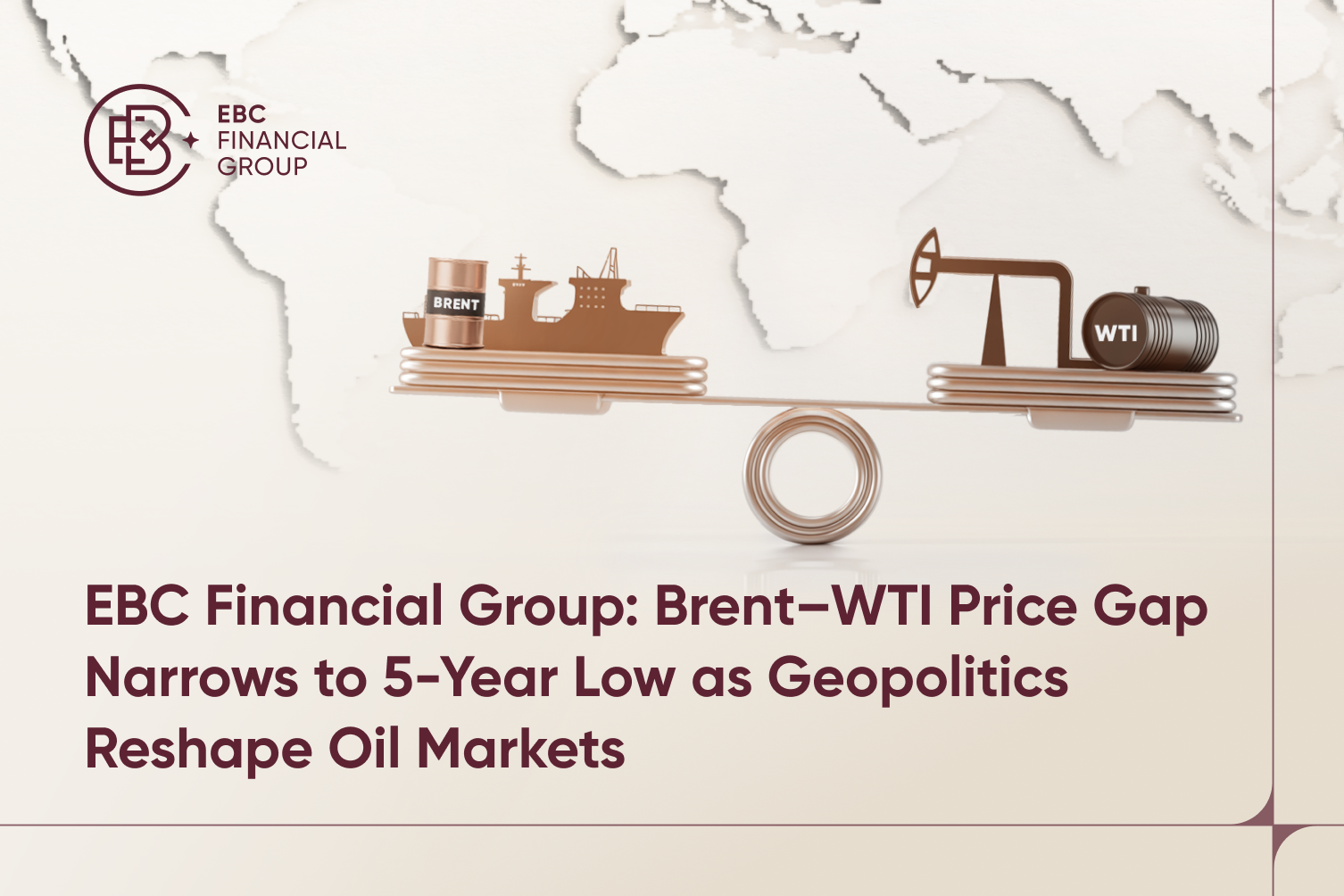
Tensions in the Middle East, US shale and OPEC+ adjustments are redefining global oil price rules.
DC, UNITED STATES, October 8, 2025 /EINPresswire.com/ -- Oil benchmarks are converging as Brent and West Texas Intermediate (WTI) trade with the tightest spread in five years, reflecting a profound shift in global crude oil dynamics. Brent crude futures for November fell to $67.50 per barrel on Tuesday, while WTI traded at $63.05, leaving the spread between Brent and WTI at around $4.45. The reduction in the premium highlights how geopolitics and U.S. export capacity are redefining the traditional geography of oil prices.
"Oil markets are entering a new phase where the traditional dominance of Brent as a global
benchmark is no longer guaranteed," said David Barrett, CEO of EBC Financial Group (UK) Ltd. "For traders, the spread reduction is an opportunity, but also a risk. You need to focus on disciplined strategies, as the old pricing rules are being rewritten."The Great Convergence
Historically, Brent has had a considerable premium over WTI, in part due to its exposure to global seaborne trade. But that gap has been narrowing as U.S. shale oil production and export infrastructure expand.
"What we're seeing is the great convergence: U.S. barrels that were previously trapped in domestic markets are now reshaping global prices," said David Barrett.
The resumption of crude oil exports from the Iraqi Kurdistan Region, after a two-and-a-half-year hiatus, has added between 150,000 and 160,000 barrels per day to Mediterranean markets, with the potential to rise to 230,000 barrels per day as agreements with international oil companies deepen. This coincides with rising U.S. export volumes, which are increasingly pricing in marginal crude oil from the Atlantic basin.
The New Geography of Crude Oil
Geopolitical hotspots remain central to market volatility. OPEC+ is expected to approve a production increase of at least 137,000 barrels per day in November, increasing supply in a market that is already grappling with changes in flows from the Middle East. Meanwhile, tensions in the region, from maritime security and changes in alliances to the risks of contagion from Gaza, continue to amplify uncertainty around Brent's role as a global benchmark.
"WTI is no longer a purely national issue," Barrett added. "As U.S. exports grow, it is becoming a global benchmark in its own right. The reduction of the differential with Brent reflects both the logistics of the new pipelines and the geopolitical context that shapes maritime flows."
Outlook: volatility in convergence
The near-term outlook suggests that oil prices will remain volatile. Brent is facing resistance near $70, while WTI's downside support stands near $62. Analysts warn that the narrow spread between Brent and WTI could widen again if geopolitical crises restrict seaborne supply or if U.S. export growth stalls.
For traders, the key is to position around volatility rather than betting on sustained convergence. Hedging strategies in futures markets remain critical, while spreads and calendar trading can offer tactical opportunities. As long-standing assumptions about Brent dominance are being challenged, risk management should take precedence over directional bets.
For more EBC analysis, please visit: https://www.ebc.com/es/forex/es-news-today/
Disclaimer: This article reflects the observations of EBC Financial Group (SVG) LLC and is for reference purposes only. It does not constitute financial or investment advice. Trading contracts for difference (CFDs) and foreign exchange (FX) carries a significant risk of loss, which may exceed your initial investment. Before trading, you should carefully consider your financial situation, investment objectives, experience and risk appetite, and consult an independent financial advisor if necessary, as EBC Financial Group and its global entities cannot be held liable for any damages that may result from reliance on this information.

No comments:
Post a Comment